Insta360 Is Building Two Mirrorless Cameras – And One Could Change the Way We Shoot
The mirrorless camera market could be about to get a very interesting new competitor. Insta360, best known for its 360-degree and action cameras, has officially confirmed that it is developing two new mirrorless cameras.
The news is particularly interesting because Insta360 doesn’t appear to be planning a conventional camera that simply looks like everything else on the market. According to comments from company founder and CEO Jingkang “JK” Liu, one of the cameras will feature a completely unconventional design.
For photographers and filmmakers, that raises an obvious question: what exactly is Insta360 planning?
Insta360 Enters the Mirrorless Camera World
Insta360 has built its reputation around compact cameras, 360-degree imaging, action cameras and increasingly sophisticated AI-powered shooting and editing technology.
The company has now confirmed that it is moving into the interchangeable-lens camera market.
Rather than developing just one model, Insta360 is working on two different mirrorless cameras, according to comments made by CEO JK Liu during an interview with Japanese publication MyNavi.
Details are still limited, but the announcement suggests that Insta360 isn’t simply trying to compete directly with established manufacturers such as Sony, Canon, Nikon, Fujifilm and Panasonic.
Instead, the company appears to be looking at how the camera itself could be redesigned.
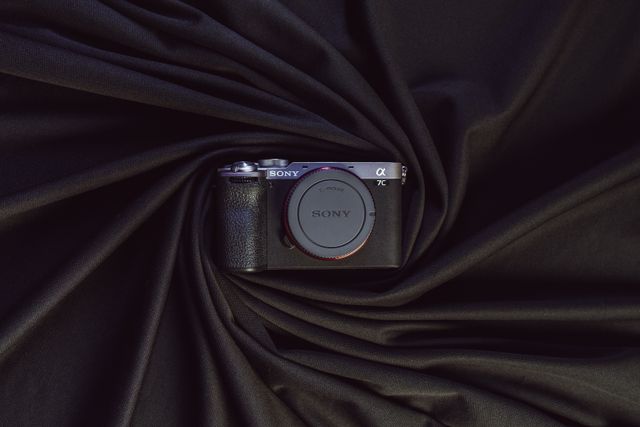
One Camera Could Have a Completely New Shape
Perhaps the most intriguing part of the announcement is the description of one of the upcoming cameras.
Liu has indicated that one model will have a form that photographers may not have seen before. That could mean a radical change to the traditional camera body, controls or even the way photographers interact with an interchangeable-lens camera.
At this stage, however, there are no confirmed specifications or official images of the finished product.
That leaves plenty of room for speculation.
Will it be smaller than a conventional mirrorless camera? Could it incorporate a radically different screen or control system? Or could Insta360 use some of the ideas it has developed for its 360-degree cameras to create an entirely new shooting experience?
For now, we simply don’t know.
AI Could Be at the Centre of the New Cameras
One area where Insta360 already has considerable experience is artificial intelligence.
Modern Insta360 cameras use AI and computational photography for features such as subject tracking, automatic framing and simplified editing. The company has increasingly focused on making advanced imaging technology accessible to people who may not consider themselves experienced camera users.
That philosophy could become particularly important with its new mirrorless cameras.
Traditional interchangeable-lens cameras can be intimidating for beginners. Aperture, shutter speed, ISO, autofocus modes, exposure compensation and lens selection all give photographers enormous creative control, but they also introduce a learning curve.
Insta360 appears interested in reducing some of that complexity through technology.
The company’s CEO has suggested that AI and new technologies could make interchangeable-lens cameras easier for people who aren’t already familiar with them.
If Insta360 manages to combine the flexibility of interchangeable lenses with intelligent automation, the result could be very different from today’s typical mirrorless camera.
Two Cameras Could Mean Two Very Different Ideas
The fact that Insta360 is developing two cameras makes the announcement even more interesting.
One could potentially follow a more conventional mirrorless design, giving photographers a familiar starting point while introducing Insta360’s own technology.
The second appears to be the more experimental model.
That distinction could allow Insta360 to test two approaches to the mirrorless market: one aimed at photographers looking for a modern alternative to established cameras, and another designed around a completely different way of taking pictures.
It is also possible that the two cameras will target very different types of users.
At the moment, though, Insta360 has not revealed enough information to know exactly where each model will sit in the market.
Could We See a Prototype in 2027?
There is at least one potential date for photographers to watch.
Insta360’s CEO has indicated that the company could show a prototype at CP+ 2027, the major Japanese camera and photography exhibition.
A prototype appearance would give photographers their first real opportunity to see how Insta360’s ideas translate into a physical camera.
It would also answer some of the biggest questions surrounding the project.
Until then, any leaked images, specifications or rumours should be treated carefully. Insta360 has confirmed the development of the cameras, but it has not yet announced final specifications, pricing or a commercial release date.
What Could Insta360 Bring to Mirrorless Photography?
The most exciting possibility isn’t necessarily better resolution or faster autofocus.
The bigger opportunity could be rethinking how photographers use a camera.
For decades, digital cameras have largely followed the same basic formula: a rectangular body, physical controls, an electronic or optical viewfinder, a rear screen and an interchangeable lens mount.
Manufacturers have improved almost every component, but the fundamental interaction has remained remarkably consistent.
Insta360 has built its business around doing things differently.
Its 360-degree cameras already encourage photographers to think differently about composition because the camera can capture the surrounding environment and allow the final framing to be decided later.
Bringing that philosophy into the mirrorless world could produce something genuinely interesting.
Imagine a camera that can intelligently suggest compositions, automatically track a subject, select appropriate settings and still give the photographer the creative control of interchangeable lenses.
That combination could appeal not only to experienced photographers but also to people who currently rely almost entirely on smartphones.
A Potential Challenge to the Established Camera Brands
Sony, Canon, Nikon, Fujifilm and Panasonic have decades of experience designing interchangeable-lens cameras.
Insta360 doesn’t have that history.
But that could actually be an advantage.
The company isn’t necessarily tied to traditional camera design conventions. Its experience comes from action cameras, 360-degree imaging, computational photography and software-driven workflows.
That means Insta360 can potentially approach the mirrorless market from a different direction.
Rather than asking, “How do we build a better conventional camera?”, the company could be asking:
“What should a camera look and feel like in the future?”
That’s a much more interesting question.
What We Know So Far
At this point, the confirmed information is relatively limited:
- Insta360 is developing two mirrorless cameras.
- Both are expected to use interchangeable lenses.
- One model is being described as having a highly unusual design.
- AI and new technology are expected to play an important role.
- Insta360 may show a prototype at CP+ 2027.
- There are currently no confirmed launch specifications, pricing or release date.
Everything beyond those points should be considered speculation until Insta360 officially reveals more.
Why This Is Exciting for Photographers
The arrival of another camera manufacturer isn’t necessarily revolutionary by itself.
What makes Insta360’s move interesting is the possibility that the company could challenge some of the assumptions surrounding modern cameras.
Smartphones have already changed photography by making sophisticated computational photography almost invisible to the user. Insta360 could take a similar approach to interchangeable-lens cameras.
If the company can combine traditional photographic control, interchangeable lenses, AI and a radically different camera design, it could create a new category somewhere between the simplicity of a smartphone and the flexibility of a professional mirrorless camera.
For photographers, that’s something worth watching.
The big question now is simple:
What does an Insta360 mirrorless camera actually look like?
We may have to wait until CP+ 2027 to get our first proper answer.
Final Thoughts
Insta360’s move into mirrorless photography could be one of the more interesting camera developments to watch over the next year.
The company isn’t promising another ordinary interchangeable-lens camera. Instead, it appears to be exploring new ways of handling composition, focusing, shooting and camera control.
For now, the details remain a mystery. But if Insta360 delivers on its promise of a genuinely different camera design, photographers could be looking at something much more significant than simply another new camera.
At digitPro, we’ll be keeping an eye on the project as more information becomes available.