I sometimes wonder how much of my life I actually remember.
Memory is a strange thing. It does not behave like a photograph. It is more like a story that has been told so many times that, eventually, you can no longer remember which parts you witnessed, which parts were told to you, and which parts your own mind quietly added along the way.
Perhaps that is why I have always been interested in stories.
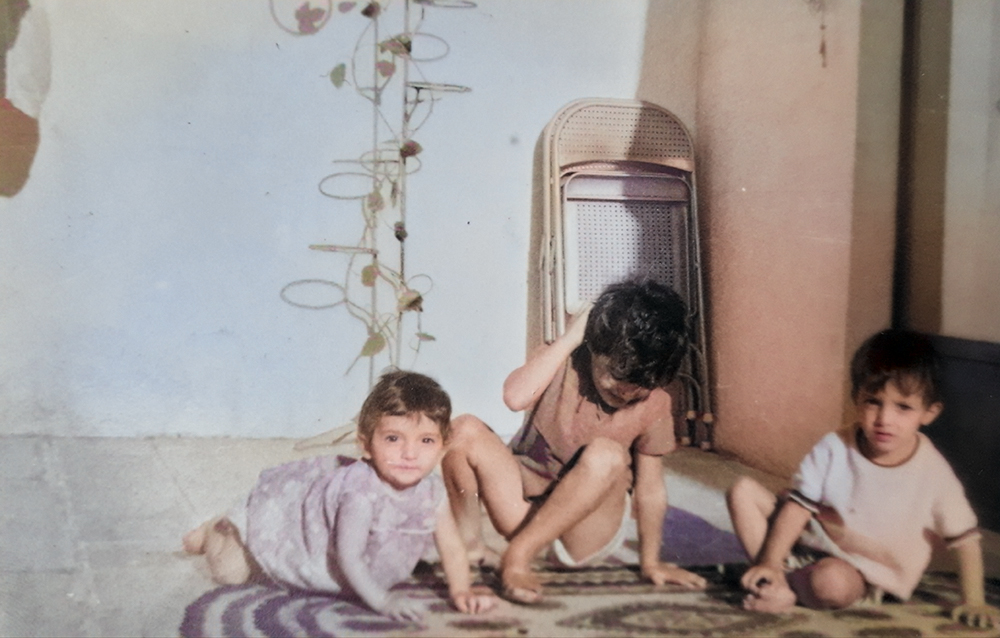
My own begins in Tehran, in the winter of 1966.
I was the third child in a middle-class family. My father was thirty-two and came from a wealthy landowning family in northern Iran. But by the time I was born, that wealth had largely disappeared following the land reforms of the 1960s. He became a surveyor for a road construction company. My mother was only twenty-two and ran a small hair salon from our home.
They worked hard.
According to the stories they later told me, those first years were not easy. They were saving for a home of their own, and eventually, as the country’s economy improved, they managed to buy one in Tehranpars, on the eastern edge of Tehran.
I was perhaps three or four years old.
I remember a small house with a basement and a little garden in front. I remember my mother looking after her plants. I remember narrow streets lined with houses that looked almost identical, as though the same architect had drawn the whole neighbourhood.
And I remember freedom.
Tehranpars was close to forests and parks. Beyond the streets where we lived there were still open spaces, and beyond the third Falakeh there was a public swimming pool that became one of the great destinations of my childhood.
My siblings and I went there every summer.
At that age, the world seemed simple.
There was the house.
There was the garden.
There were the streets.
There was the swimming pool.
And there were the forests beyond them.
I did not yet know that the world I was growing up in was about to disappear.
I was still a child when Iran began changing.
In 1978, something happened that I did not fully understand at the time. People around me suddenly became political. Conversations that had once been about ordinary life became conversations about the country, freedom, prisoners, the Shah, religion and revolution.
Even my father changed.
For most of his life, he had considered himself a Social Democrat and supported parliamentary democracy. I remember him telling me that he was not religious.
And yet, for a period during the revolution, he supported Khomeini.
Looking back, I think my father was not supporting the revolution for the reasons that history eventually associated with it. He believed that if the different opposition groups united, they could force the Shah to negotiate, release political prisoners and open the political system.
When Shapour Bakhtiar became prime minister, my father believed that perhaps the revolution had achieved what it had set out to achieve.
Then everything changed.
The revolution became something different from what many people had imagined.
My father realised his mistake, but by then the direction of the country had changed.
For a child, these things were difficult to understand.
I watched adults change their minds.
I watched people who had once believed one thing suddenly believe something else.
I watched religion become politics and politics become something much more dangerous.
And somewhere in the middle of all this, I began asking questions.
Perhaps that was the beginning of everything.
When I was about eleven, I discovered religion.
Or perhaps I should say I discovered that there was such a thing as religion.
My parents had never made a great issue of it. We were a secular family, and because we had Zoroastrian friends, I had even assumed for a while that Zoroastrianism was simply what everyone believed.
Then one summer we travelled to northern Iran.
My cousin was at a summer camp run by a Catholic church school, and my parents took me there for the day.
It was my first real encounter with priests.
I loved it.
The teachers were priests, and something about the experience fascinated me. I remember thinking that perhaps one day I would become a Christian priest.
It sounds strange now.
A boy in Iran, from a non-Christian family, dreaming of becoming a priest.
But perhaps that is exactly the point.
I was curious.
That evening I asked my father about religion.
He could have told me what to believe.
Instead, he told me something that would stay with me for the rest of my life.
He said he was not a religious person.
And if I was interested in religion, I should study all of them and decide for myself.
So I did.
Near my father’s office there was a library, in the same building as a mosque. I became a member and began reading whatever I could find.
There were many books about Islam and fewer about other religions, but it did not matter.
I had discovered questions.
I would go there after school, do my homework, read books and wait for my father to finish work.
Eventually I made Muslim friends.
One afternoon they invited me to the mosque.
I told them I didn’t know how to pray.
They laughed and told me not to worry.
“Just follow the person in front.”
So I did.
It was fascinating and confusing at the same time.
The prayer was in Arabic, and I could not understand the words.
I remember wondering why people would pray in a language they did not understand.
More importantly, I wondered why people so rarely questioned what they believed.
Many people seemed to inherit their religion in the same way they inherited their surname, their house or their accent.
Their parents believed it.
Therefore they believed it.
I could not understand that.
I wanted to know.
Then the revolution came.
And suddenly religion was no longer simply something I was studying in a library.
It was power.
It was politics.
It was everywhere.
As I watched religious leaders become political leaders, I began to see something that disturbed me. What had initially appeared to me as spirituality increasingly seemed connected to authority, control and power.
Perhaps I was too young to understand the complexity of what I was seeing.
Perhaps my memory has simplified it.
But that was how it felt.
And then came the war.
I was fourteen when the Iran-Iraq War began.
I was one of the lucky ones. My family managed to keep me away from the worst of it, and eventually they sent me abroad for my safety.
But war has a way of entering your mind even when it does not enter your home.
You hear the stories.
You see the fear.
You watch people disappear.
You understand that somewhere, not very far away, people your own age are standing in trenches.
Sometimes they have bullets.
Sometimes they don’t.
And sometimes they are simply trying to survive another night.
That is perhaps why I have always hated war.
Not because I know everything about it.
But because I know enough to understand that human beings should have another way of resolving their differences.
There is another story I remember.
Or perhaps it is a story I was told.
Sometimes I still don’t know where the boundary lies.
It is the story of a boy from Esheghabad.
The boy was young, but he had already learned something about courage.
During the difficult years of war, he and his friends sometimes stood at their posts through the night with almost nothing to defend themselves with. On one particularly bad night, they had no bullets left.
But they stayed.
At first, they stayed because they did not want the enemy to realise that the post was empty.
Later, they stayed because the people living nearby felt safer knowing someone was there.
That boy eventually became involved in investigations.
He was young, so they did not give him weapons. Instead, they told him to study. He was sent to libraries, instructed to read, learn and help the investigation team with administration.
He hated it.
He wanted to be where the action was.
But he listened.
He trained in martial arts in the mornings, studied during the day and spent his free time climbing mountains or playing sports.
Then the situation in Esheghabad deteriorated.
Soldiers were being sent to the front. The authorities became weaker. Armed groups and criminals began attacking civilians, students and political activists.
The boy had built relationships with students and young activists through his work in the libraries and newspapers.
So he began looking into some of what was happening.
One day he went to a house where, according to the official story, security forces had been attacked by armed rebels.
Everyone inside had been killed.
The boy stood outside and looked at the building.
There were bullet holes everywhere.
But something did not make sense.
He looked across the street.
He looked at the cars.
He looked at the direction of the bullet marks.
This did not look like self-defence.
It looked like an execution.
He mentioned this to a soldier.
The soldier shrugged.
“Maybe it was divine intervention.”
The boy walked away.
But he did not forget.
He went to the university.
He spoke to students.
Eventually he went to the office of a young socialist group he knew.
Usually the door was open.
That day it was closed.
They let him in when they recognised him.
He told them what he had seen.
They already knew.
Then they asked him an important question.
Had he spoken to anyone about it?
He remembered the soldier.
Before he could say much more, there was heavy knocking at the door.
Someone looked through the window.
Militants were outside.
They told the boy to leave through the bathroom window.
He climbed out and ran.
That night, he heard that the office had been attacked.
People had been killed.
Others were arrested.
For perhaps the first time in his life, the boy experienced something more frightening than physical danger.
Betrayal.
He had believed he was helping his own people become free.
Now he was not sure who his own people were.
I think that was one of the great lessons of my life.
Freedom is not simply about knowing who the enemy is.
Sometimes the hardest question is whether the people standing beside you are actually fighting for the same thing you are.
And perhaps that is why another story from my family has always stayed somewhere in the back of my mind.
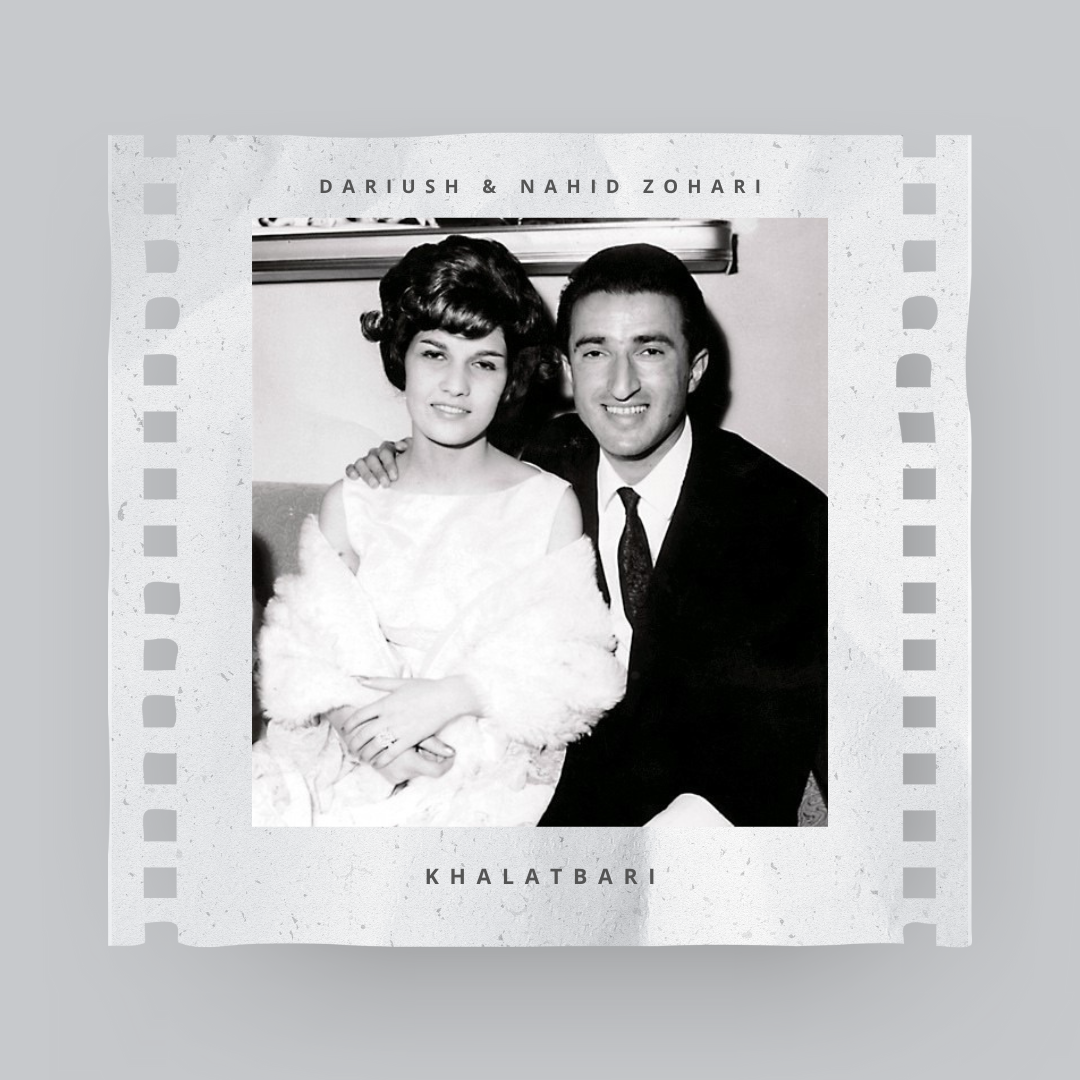
There are different versions of the story of my grandfather, Abdullah Khalatbari Zohari, known by titles such as Motamed-ol-Soltan and Zaigham-ol-Mamalek.
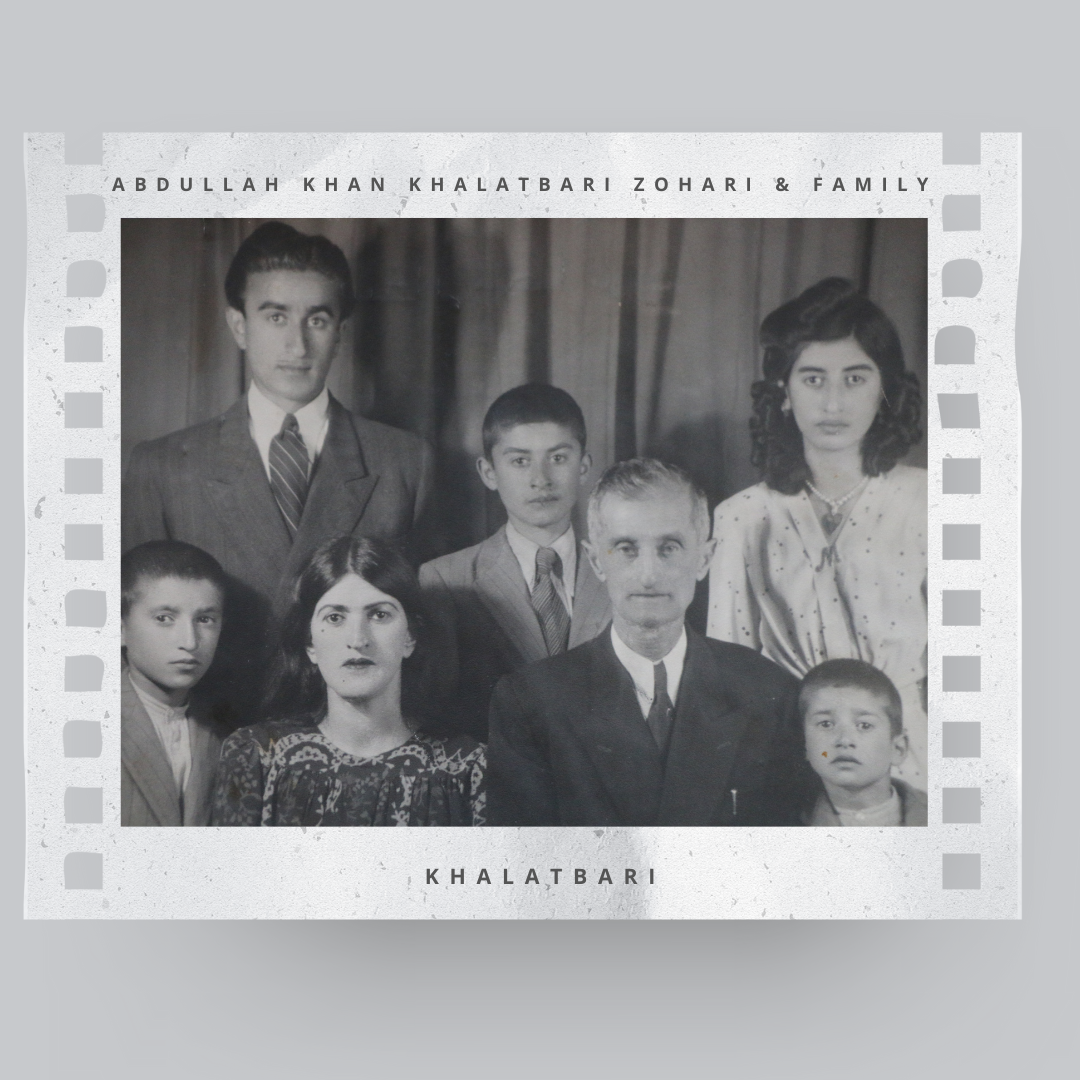
Was he Muslim?
Was he Jewish?
I don’t know.
I have heard different stories from different people.
I have chosen to put more trust in the stories told by Iranian and Israeli friends who knew the family personally than in some of the European versions I have encountered.
But perhaps even that is part of the problem.
How much of history is truth?
How much is memory?
How much is family mythology?
And how much is simply the story we choose because it allows us to live with ourselves?
I choose to believe that he was a good man who wanted freedom for his people on both sides of the border.
You are free to believe something else.
That is the point.
You are free to believe.
Eventually, I left Iran.
I was twenty-one.
My family feared for my safety and believed there was no clear future for me there.
So I left.
I carried with me a country that was no longer the country of my childhood.
I carried memories of Tehranpars.
The little garden.
The swimming pool.
The forests.
The revolution.
The war.
The questions.
And all the things I still did not understand.
Years passed.
I grew older.
The boy became a man.
And yet I never stopped walking.
Perhaps that is the real story.
Not Iran.
Not religion.
Not revolution.
Not war.
Not even my family.
Walking.
Searching.
Trying to understand.
Trying to decide what I believe without allowing someone else to decide it for me.
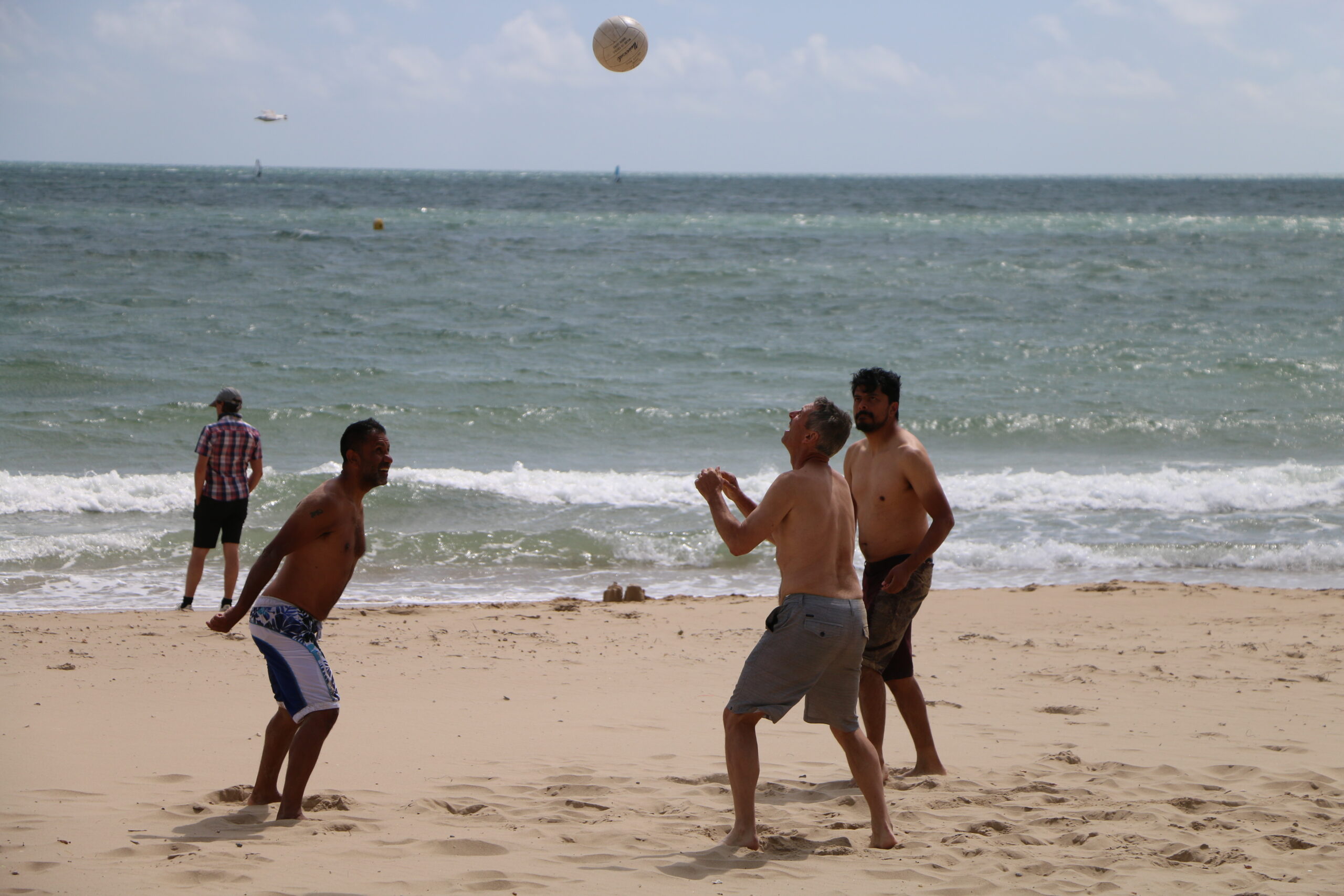
Many years later, I found myself sitting around a campfire somewhere in southeast England.
Every year, some friends and I go away for a few days.
No constant phone.
No endless internet.
Just nature, conversation and time.
This year the group was smaller.
It was better that way.
We talked about life, politics, art and writing.
I had recently begun writing more seriously, and my friends gave me advice about things I had been struggling with.
Then, for the first time in my life, I openly admitted something I had carried quietly for decades.
As a child, I had wanted to become a Christian priest.
Everyone laughed.
But for me it was not really a joke.
That strange dream was connected to everything that came afterwards.
The boy who did not know what religion he belonged to.
The boy who asked his father.
The boy who went to the library.
The boy who followed his friends into a mosque.
The boy who questioned why people prayed in words they did not understand.
The boy who watched a revolution turn into something he had not expected.
The boy who learned that people could kill in the name of freedom, religion, the state or even God.
The boy who eventually had to leave his country.
Perhaps I had spent my entire life trying to answer the question I asked my father when I was eleven.
What do I believe?
And perhaps his answer was the greatest gift he ever gave me.
Decide for yourself.
I don’t know whether all these stories are completely true.
I don’t know whether some details have moved around in my memory.
Perhaps some of them belong to my childhood.
Perhaps some belong to my parents.
Perhaps some belong to stories told around tables long after the people who lived them were gone.
But I know what they mean to me.
I believe in love.
I believe in believing in yourself.
I choose to be good.
That is my religion.
That is my choice.
I don’t even tell my son what he must believe.
I gave him the same freedom my father gave me.
He can choose his own beliefs.
I only ask him to be good.
And I know he is.
With a heart full of love.
Please don’t lie to him about me.
Let him keep his pure heart.
Please don’t poison his mind, as the world once poisoned mine.
And remember:
This is only a story.
You can write your own story.
Tomorrow is another story.
My power comes from what I believe.
Because I write my story.
And I live it.
I am a man who walks through the world because, as long as I am still walking, there is still hope.
Hope for my people.
Hope for the truth.
And perhaps, most importantly,
hope for the freedom to choose who we become.