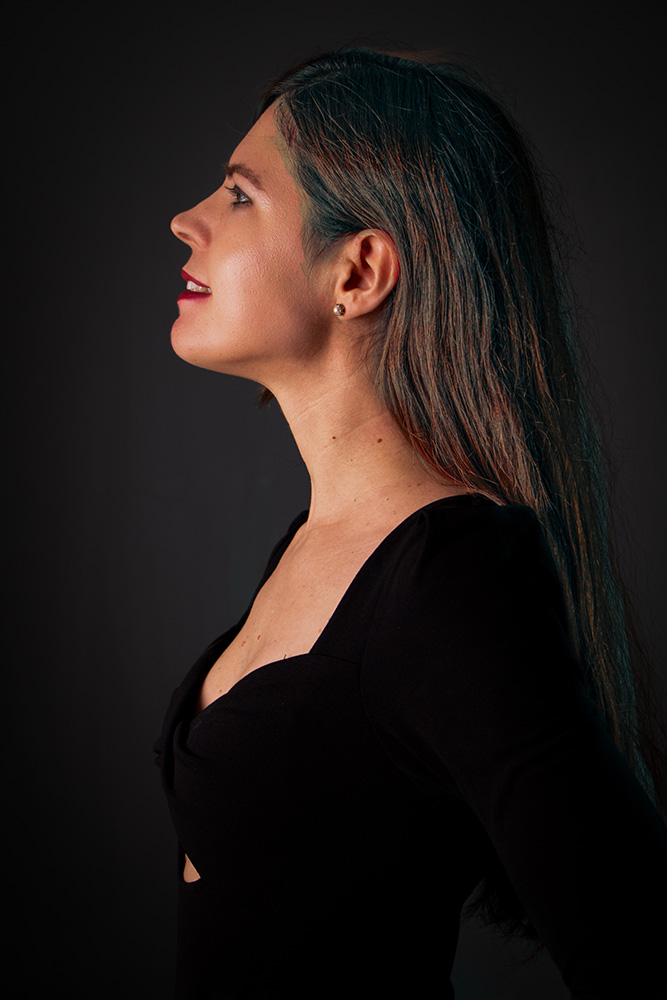
The Art of Noticing: Sarah Mozer on Painting, Poetry and Finding Beauty Along the Dorset Coast
An artist’s journey through creativity, changing landscapes and the quiet beauty of everyday life.
digitPro Magazine | Artist Stories | Dorset
There is something quietly remarkable about the way we experience the world around us. The same stretch of coastline, the same changing light, the same movement of the sea can mean entirely different things to different people. For Dorset-based artist and poet Sarah Mozer, learning to notice these fleeting moments has become an important part of her creative life.
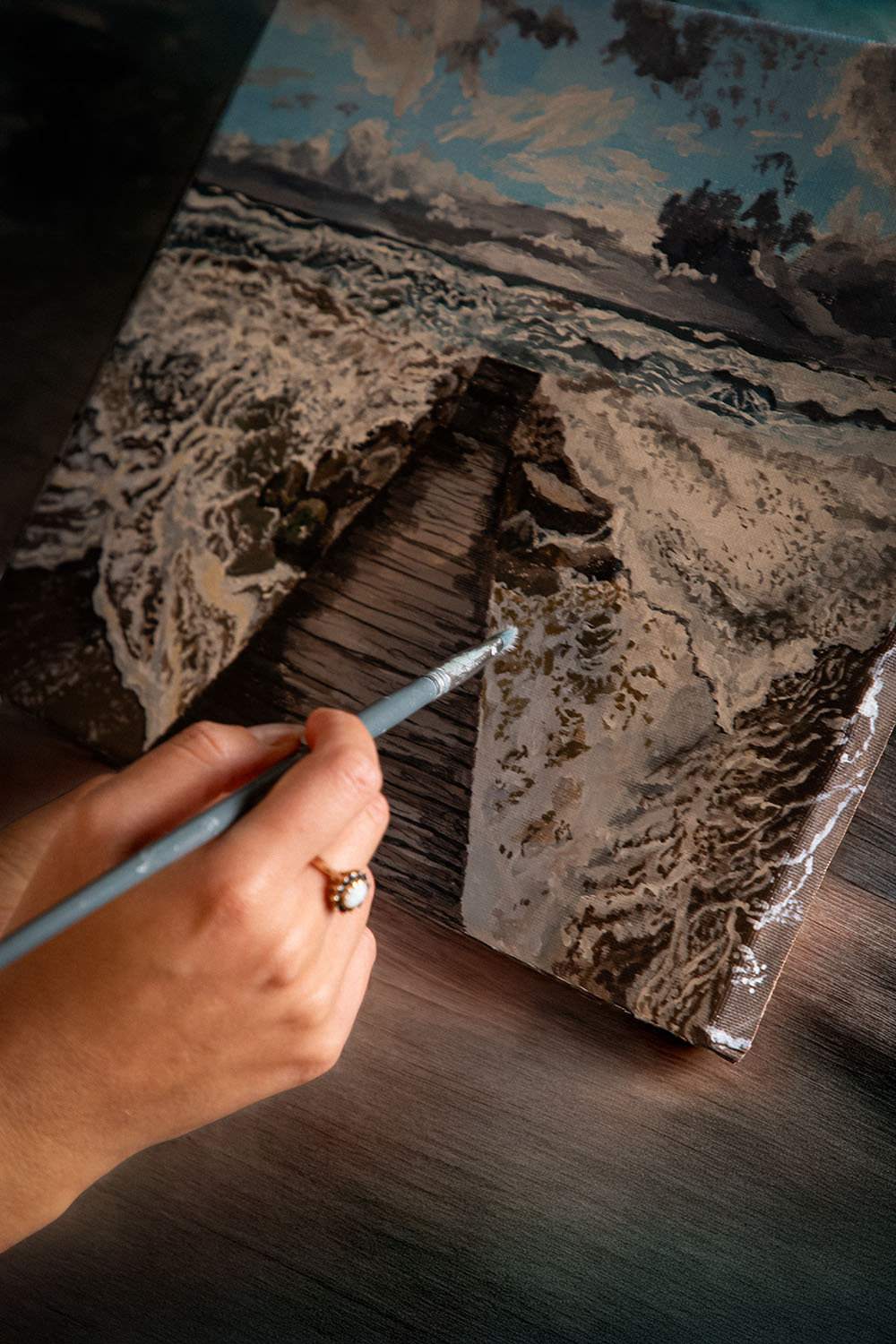
Working primarily with watercolour and acrylic paint, Sarah captures the landscapes of the Dorset coast with a sense of affection and curiosity. Her paintings are not simply representations of beautiful places; they are expressions of a personal connection to the natural world, shaped by experiences that have taught her the value of moments many of us might otherwise overlook.
I met Sarah at digitPro Atelier in Bournemouth for a conversation about her artistic journey, her poetry, the influence of the Dorset landscape and what creativity means to her.
Finding a Home by the Sea
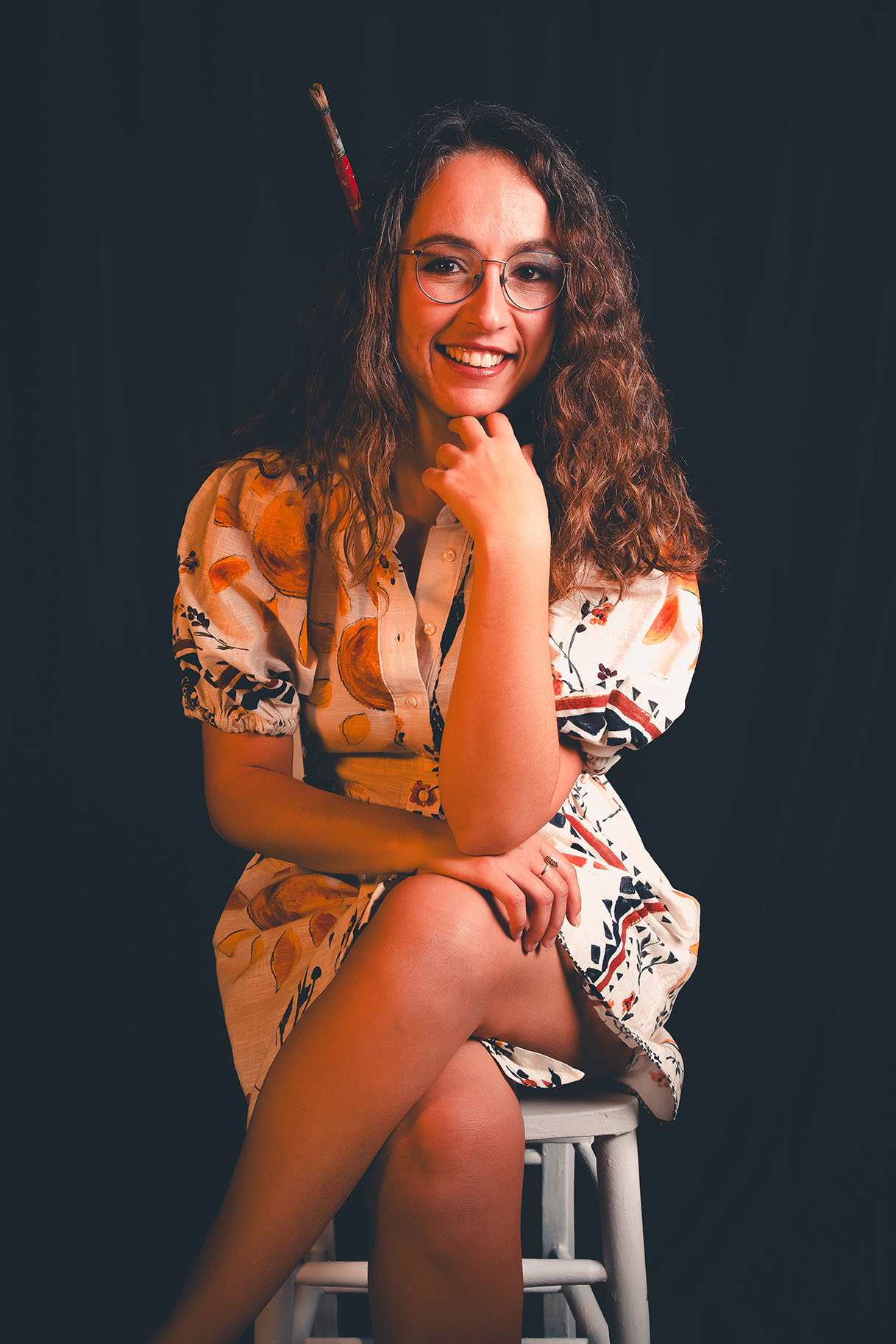
Sarah moved to Dorset from London in March 2025, following her parents’ relocation to the area. Having spent much of her life in the city, she discovered something unexpectedly familiar about living near the coast.
“Even though I’ve always lived in the city, I feel more at home by the coast,” she explains.
The move brought more than a change of scenery. It opened an entirely new direction in her painting.
Before arriving in Dorset, Sarah had barely explored landscape painting. But surrounded by coastal scenery, she found herself increasingly inspired by the places she encountered.
“It was seeing the beautiful landscape that was right on my doorstep that inspired me to start painting it.”
What began as an exploration gradually developed into a substantial collection of landscape paintings, created over approximately a year.
Her exhibition, A Love Letter to the Land, grew from this connection. The title is particularly fitting because Sarah’s relationship with the landscape extends beyond painting. She has also been working on a poem inspired by her affection for the place she now calls home.
The exhibition brought these different creative expressions together, featuring paintings alongside some of her poetry.
For Sarah, the relationship between painting and writing may not always be straightforward, but both belong to the same creative identity.
Becoming an Artist, One Painting at a Time
Although creativity has accompanied Sarah since childhood, she admits that calling herself an artist still feels somewhat unfamiliar.
She remembers drawing with her sister and rediscovering childhood artwork while sorting through old belongings. Yet the transition from someone who enjoys creating to someone who confidently identifies as an artist has been gradual.
“As for thinking of myself as an artist, that’s still a work in progress,” she says.
There is an appealing honesty in this admission.
Sarah has already exhibited her work twice, placed paintings in shops and begun earning money through her creativity. Yet professional recognition does not automatically remove self-doubt.
She describes the tension between impostor syndrome and the reality that people are buying and appreciating her work.
Perhaps this is something many creative people recognise: the strange experience of producing work that others value while still questioning whether one has earned the right to call oneself an artist.
For Sarah, artistic identity appears to be something she is gradually growing into, rather than a title she has simply decided to adopt.
Learning to See the World Differently
One of the most interesting aspects of Sarah’s story is the relationship between her experiences of ill health and her appreciation of the natural world.
During periods of her life, she was unable to leave her home and, at times, even her bed.
Those experiences changed the significance of ordinary moments.
Sarah remembers what it felt like to go outside again after a long period indoors.
“I would just notice so much around me that I think if you see it all the time, you can often become blind to it.”
There is a profound simplicity in that observation.
We become accustomed to the things surrounding us. The colours of the sky, the movement of the water, the shadows across the ground become familiar background details.
But when access to the outside world has been restricted, those same details can acquire an entirely different meaning.
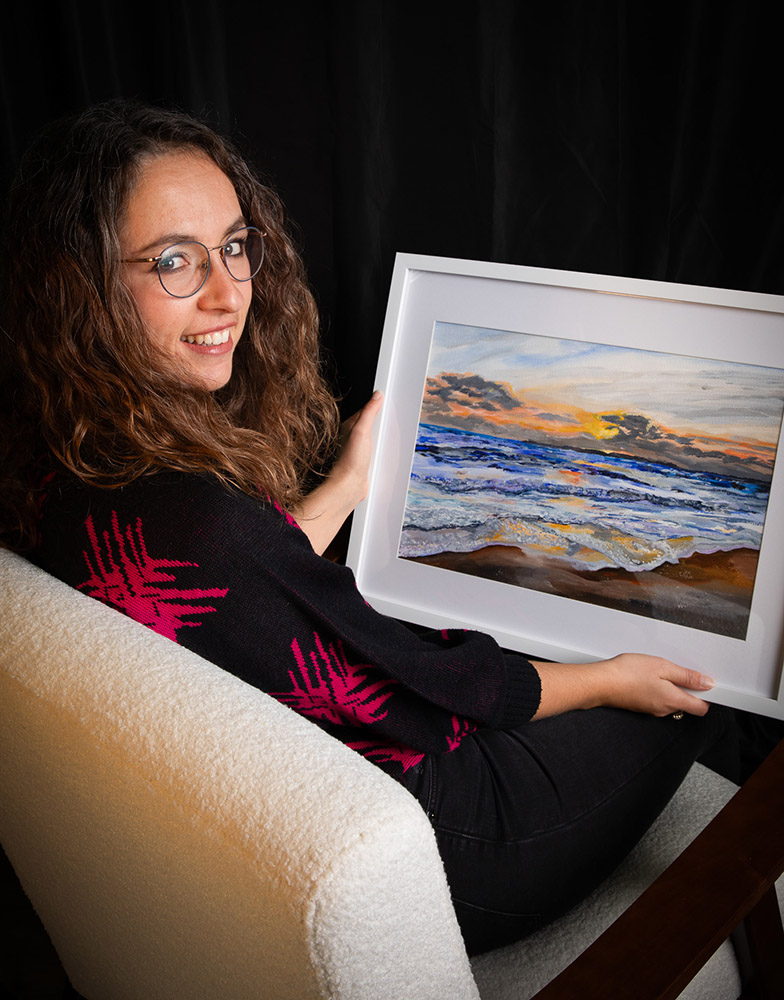
Sarah describes noticing the movement of the ocean, the changing light and the colours around her with a heightened sense of awareness.
Interestingly, she also recognises that this sensitivity has changed as her health has improved.
The more freely she can experience everyday life, the easier it becomes to take some of those experiences for granted.
It is an unusually candid reflection, and one that gives her artistic perspective particular depth.
Her paintings emerge from an appreciation of places that she knows, loves and has experienced personally.
Painting Places That Matter
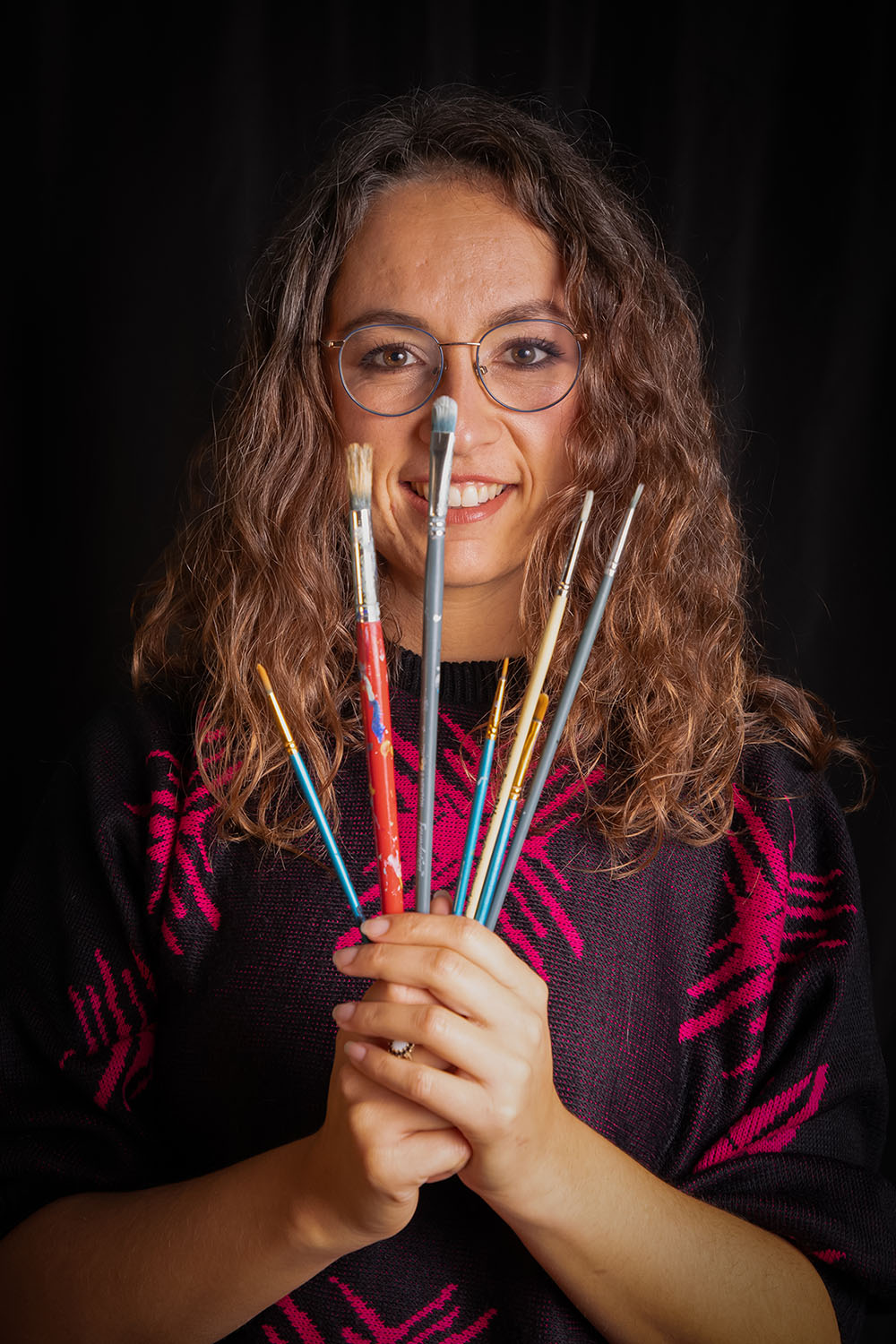
Sarah’s painting process usually begins with a photograph.
Because painting outdoors can be physically challenging, she often photographs a landscape that captures her attention and later works from the image at home.
At first, she describes her approach as painting what she sees. But as our conversation develops, another element becomes apparent.
The emotional connection to a place matters just as much as its visual appearance.
When a painting becomes frustrating or she finds herself overthinking the process, Sarah tries to mentally return to the location that originally inspired it.
She reminds herself why she wanted to paint that particular place.
Rather than approaching painting as an obligation, she returns to the simple pleasure of creating something inspired by a landscape she loves.
Her work is therefore rooted in observation, but also in memory, affection and personal experience.
Sarah brought three paintings to our meeting, works she felt particularly proud of because they reflected the development of her artistic abilities.
Looking at her own progress is clearly important to her. Each painting becomes part of a larger journey, a record not only of a landscape but of an artist learning and developing her craft.
When asked whether one particular painting holds special significance, however, Sarah remembers something more personal: a watercolour portrait of her dogs, who are no longer with her.
It is a reminder that the emotional value of artwork does not necessarily depend on its commercial success or public recognition.
Sometimes a painting matters simply because of what it allows us to remember.
The Words That Saved Me
Painting is only one part of Sarah’s creative world.
She is also the author of The Words That Saved Me, a poetry collection that emerged during a particularly difficult period of her life.
At the time, her physical limitations made many forms of creative activity impossible.
Poetry offered another way to express herself.
She began composing poems mentally, gradually recording fragments and ideas in the notes on her phone.
Over approximately eight months, these fragments developed into a collection.
Initially, writing helped her process her experiences and articulate messages she needed to hear herself.
As her circumstances began to change, the poems increasingly reflected gratitude for the improvements she was experiencing.
There is an important distinction in the way Sarah approaches her two creative disciplines.
Poetry, she explains, often comes from a need to express something emotionally significant.
Painting can emerge from a happier, more settled place.
“Poetry, there has to be something that needs to be said or expressed in some way for me to actually have the urge to write.”
It is a revealing observation.
For Sarah, poetry is often a response to an inner necessity, while painting allows her to engage with the beauty and enjoyment of the world around her.
The two disciplines are different, yet they remain connected through her experiences and her evolving sense of self.
Creativity Beyond Therapy
It is tempting to describe artistic expression during difficult periods as a form of therapy.
But that description can sometimes reduce creativity to a coping mechanism, overlooking the wider meaning it holds in someone’s life.
I asked Sarah what creating art actually gives her.
Her answer was thoughtful and direct.
“It’s given me purpose when I haven’t felt able to do a lot of other things.”
She also speaks about accomplishment, enjoyment, emotional expression and the opportunities creativity has given her to connect with other people.
Perhaps most importantly, sharing her work has encouraged her to step beyond her comfort zone.
Although she still describes herself as lacking confidence, she recognises that exhibiting her paintings and engaging with others has helped her develop a greater sense of self-assurance.
Creativity, in this sense, is not simply about making something beautiful.
It can also be about participating in the world, developing an identity and discovering possibilities that might previously have seemed inaccessible.
From the Canvas to the Coast
Sarah hopes to develop a stronger online presence and make more of her artwork available for purchase.
She is also interested in exploring new artistic themes beyond the local landscapes that have dominated her recent work, although she has not yet decided what direction those explorations might take.
For now, her connection with Dorset remains an important part of her artistic story.
During our conversation, she recalled a friend visiting from London who attended her exhibition and became particularly interested in a painting of Lulworth Cove.
The friend had never visited the location but liked the painting enough to purchase a print.
More importantly, seeing the artwork inspired her to want to visit the real place.
It is a small but meaningful example of how art can influence our relationship with the world.
A painting can become an invitation to explore, to discover somewhere unfamiliar or to see a familiar landscape through another person’s eyes.
Perhaps that is one of the most rewarding possibilities for a landscape artist: creating something that encourages others to experience the beauty that originally inspired the work.
The Art of Noticing
Towards the end of our conversation, I asked Sarah a deliberately philosophical question:
Does beauty exist independently in the world, or does it depend on our ability to notice it?
She laughed at the difficulty of the question, admitting that she can be rather indecisive.
But after considering it, she offered an answer that seemed to capture much of what we had been discussing.
“I like to think that it exists independently from whether we notice it or not, because like there must be things that I notice and think are beautiful that other people aren’t spotting and vice versa.”
And then came the thought that stayed with me:
“It’s just whether somebody decides to slow down enough to see it.”
Perhaps that is the essence of Sarah Mozer’s artistic philosophy.
Her paintings do not demand that we see the world in exactly the same way she does. Instead, they invite us to become more attentive to our own surroundings.
To notice the shifting colours of the sea.
To appreciate the changing light.
To recognise the beauty of places we might otherwise pass without a second thought.
In a world that often encourages us to move faster, produce more and constantly look towards whatever comes next, Sarah’s work offers a quieter perspective.
Beauty may already be there.
Sometimes, all we need to do is slow down enough to notice it.
About Sarah Mozer
Sarah Mozer is a Dorset-based, self-taught artist and poet working primarily with watercolour and acrylic painting. Inspired by the landscapes of the Dorset coast, her work explores the beauty of the natural world and the personal connections we form with the places around us. She is also the author of the poetry collection The Words That Saved Me.
Website: https://www.sarahmozer.org/
Interview and photography by digitPro Atelier | Published in digitPro Magazine.