Architecture Photography at the Royal Pavilion, Brighton: A Visual Journey Through History
Architecture photography is about much more than photographing buildings. It is about capturing the character, details, symmetry, textures and history that make a building unique. Few places in England provide a more fascinating subject than the Royal Pavilion in Brighton — an extraordinary palace where Regency Britain meets Indian-inspired architecture, Chinese decoration and the extravagant imagination of King George IV.
Standing in the heart of Brighton, the Royal Pavilion is one of the city’s most recognisable landmarks and an incredible location for architecture photography. Its dramatic domes, minarets, ornate details and unusual combination of architectural influences make it almost impossible to take an ordinary photograph.
The History Behind the Royal Pavilion
The story of the Royal Pavilion began in the 1780s when George, Prince of Wales, started visiting Brighton. At the time, Brighton was developing from a relatively small fishing town into a fashionable seaside resort, helped by its proximity to London and the growing popularity of seawater treatments.
George initially rented a modest lodging house overlooking the fashionable promenade. In 1787, he commissioned architect Henry Holland to transform it into a more substantial residence known as the Marine Pavilion.
But George’s ambitions were considerably bigger than a simple seaside villa.
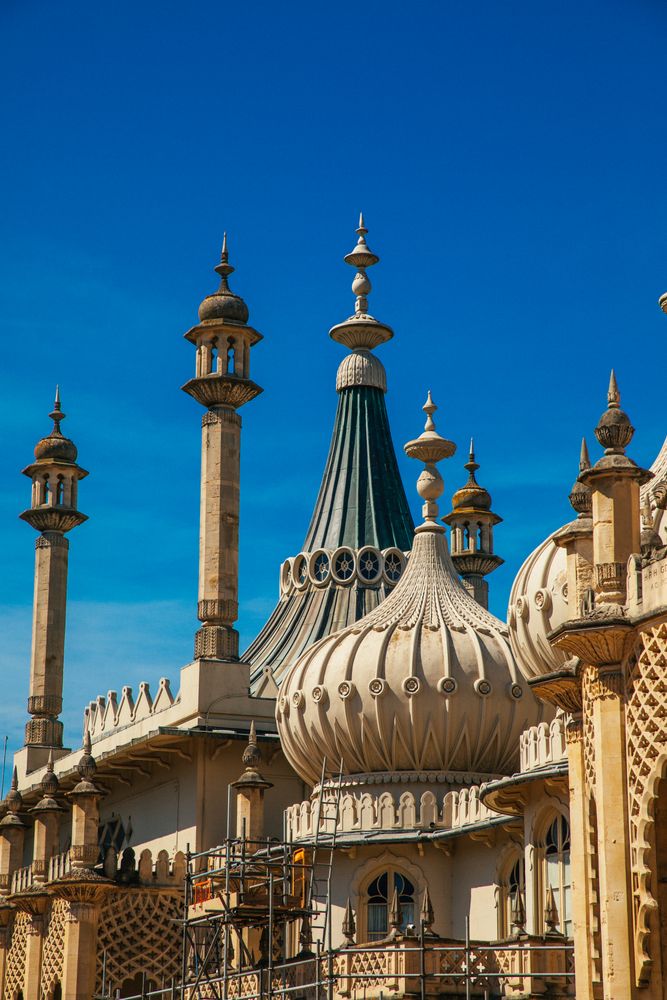
When he became Prince Regent in 1811, he commissioned architect John Nash to transform the building. From 1815, Nash dramatically expanded the Pavilion, creating the exotic palace that visitors recognise today. A cast-iron structural frame was incorporated into the earlier building, allowing Nash to create the spectacular collection of domes, minarets and pinnacles that define the exterior.
The main transformation took place during the Regency period, with the interiors completed around 1823.
Architecture Photography: Why the Royal Pavilion Is So Photogenic
For anyone interested in architecture photography, the Royal Pavilion is almost like a ready-made photographic playground.
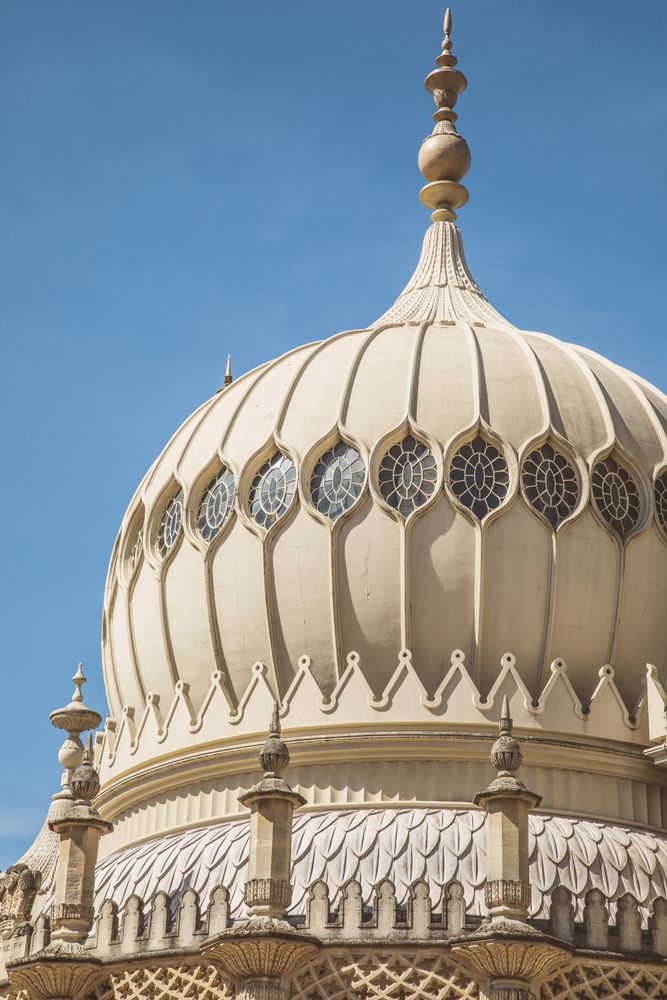
Unlike many historic British buildings that follow a relatively consistent architectural style, the Pavilion deliberately breaks the rules. Its exterior combines Regency design with strong Indian-inspired forms, while its interiors feature elaborate Chinese-inspired decoration and an extraordinary level of ornamentation.
The result is a building filled with visual contrasts.
From a photographer’s perspective, the Pavilion offers:
- Dramatic domes and minarets
- Repeating architectural patterns
- Intricate decorative details
- Strong symmetry and perspective
- Contrasting shapes and textures
- Ornamental columns and arches
- Elaborate windows and doors
- Interesting opportunities for close-up architectural details
- Changing light across the building throughout the day
The building was essentially designed to impress — and that makes it particularly rewarding to photograph.
Photographing the Exterior of the Royal Pavilion
The exterior is probably the first thing that catches a photographer’s attention.
The enormous central dome dominates the skyline, surrounded by smaller domes, minarets and decorative pinnacles. Rather than approaching the building simply as a traditional architectural record, try looking for unusual compositions.
A wide-angle photograph can emphasise the scale and drama of the palace, while a longer focal length can isolate individual architectural details.
Look upwards.
Some of the most interesting photographs can come from concentrating on the roofline, where the domes, towers and decorative elements create an almost surreal silhouette against the Brighton sky.
Symmetry can also work particularly well here. Centre the building within the frame and use its architectural lines to create a strong, formal composition.
Alternatively, deliberately move away from symmetry and photograph one section of the Pavilion against the surrounding city. The contrast between the historic palace and modern Brighton can create a completely different image.
Architecture Photography: Look for the Details
One of the best approaches to architecture photography at the Royal Pavilion is to stop thinking about the building as one enormous subject.
Instead, break it down into hundreds of smaller subjects.
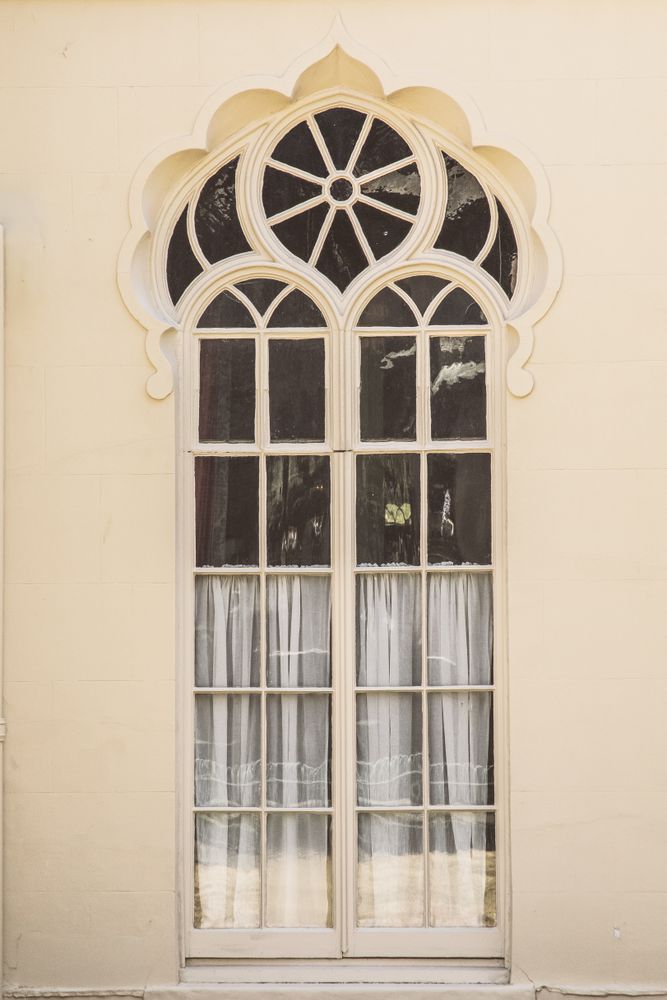
Look for patterns in the windows, decorative mouldings, arches, columns, roof details and ornamental features. Even a small section of the Pavilion can become an interesting abstract photograph.
This approach is particularly useful on cloudy days when the dramatic architecture can be emphasised through texture and contrast rather than relying entirely on beautiful sunlight.
And don’t forget the less obvious structures around the Pavilion.
The North Gate, for example, dates from 1832 and was designed by architect and surveyor Joseph Henry Good during the reign of George IV’s successor, William IV. Its oriental appearance makes it look as though it belongs to the Pavilion itself, although it was actually created later.
The Royal Pavilion Garden: Architecture Photography Beyond the Palace
The building shouldn’t be photographed in isolation.
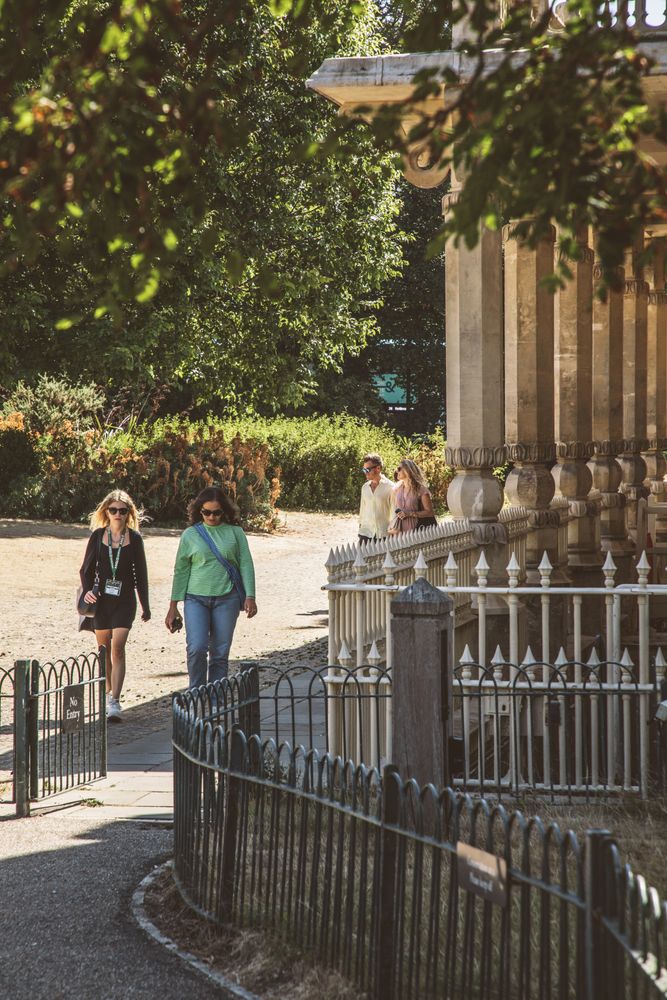
The surrounding Royal Pavilion Garden provides another opportunity to combine architecture and landscape photography. The garden was created in the 1820s as a private pleasure ground for George IV and as the setting for the Royal Pavilion and surrounding royal buildings. It is now a Grade II listed historic garden and one of the important surviving Regency landscapes in the country.
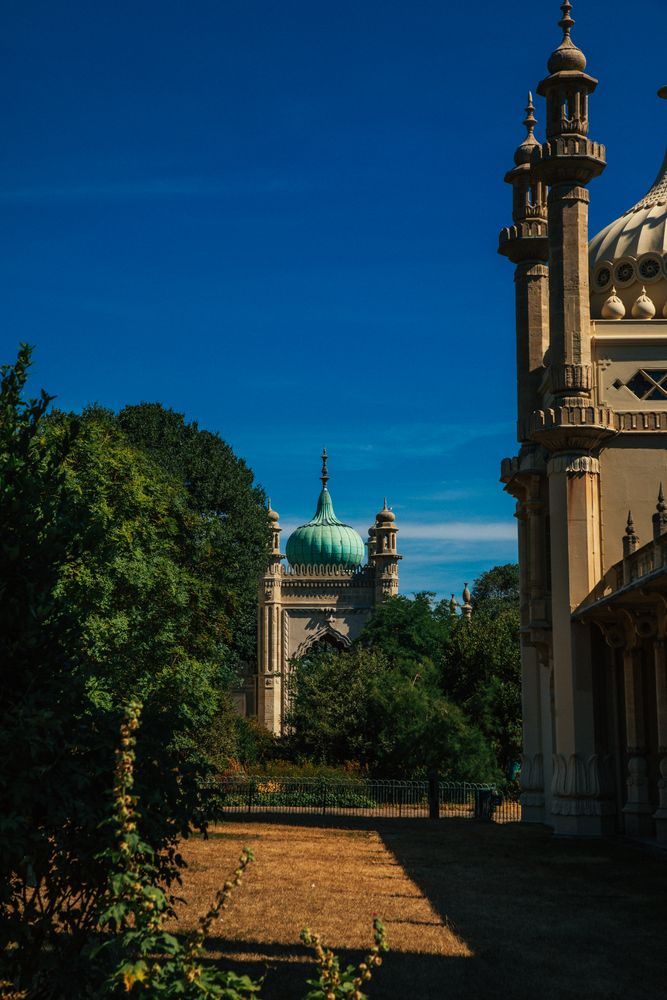
Photographing the Pavilion through trees, flowers and pathways can create a softer interpretation of the palace.
Rather than filling the entire frame with architecture, allow the garden to become part of the composition. This can give the photograph a sense of scale and atmosphere while showing how the building was intended to interact with its surroundings.
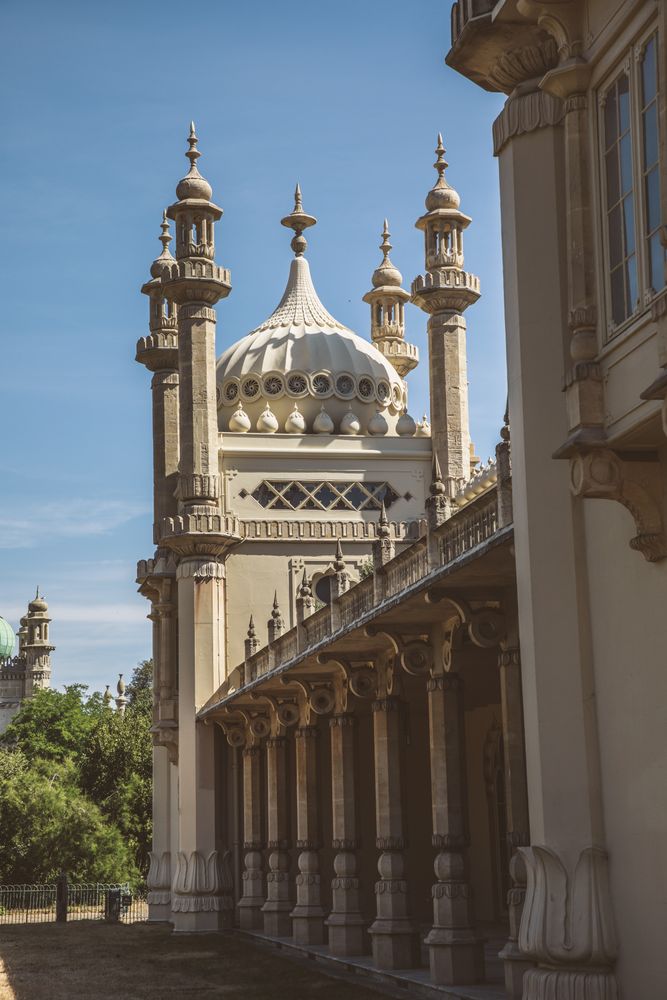
A Palace with an Extraordinary Interior
If exterior architecture is spectacular, the interior takes things to another level.
The Royal Pavilion’s rooms are famous for their opulent decoration, including elaborate Chinese-inspired interiors, dramatic colours, decorative dragons, chandeliers and lavish furnishings. The Banqueting Room, Music Room and Saloon are particularly famous for their theatrical designs.
For photographers, these spaces offer an entirely different challenge.
Instead of looking for large compositions, look for details — a chandelier against a decorated ceiling, an ornate doorway, repeating patterns or the relationship between architectural structures and decorative artwork.
The Royal Pavilion itself describes its interiors as a distinctive backdrop for photography and filming, with its Chinoiserie decoration, dramatic rooms and unusual architectural character making it a versatile location.
Interesting Photography History at the Royal Pavilion
There is also a fascinating connection between the Royal Pavilion and the early history of photography.
Pioneering photographer William Henry Fox Talbot photographed the Royal Pavilion in 1846. His photographs have subsequently helped researchers investigate details of the building, including historic blinds and shutters.
This creates an interesting connection between historical architecture and photography.
Today, photographers can stand in almost the same location and photograph architectural details that were being documented during photography’s early development.
In a way, every photograph of the Pavilion becomes part of a much longer visual record of the building.
Did You Know? The Royal Pavilion Was Once a Hospital
One of the less obvious chapters in the building’s history occurred during the First World War.
In the early months of WWI, the Royal Pavilion was converted into a military hospital for Indian Army soldiers who had been wounded or become ill while serving on the Western Front.
Later, it became a hospital for British soldiers who had lost limbs, remaining in use as a hospital until 1920.
It is difficult to imagine today’s spectacular palace interiors being used for such a completely different purpose, but this period is an important part of the Pavilion’s history.
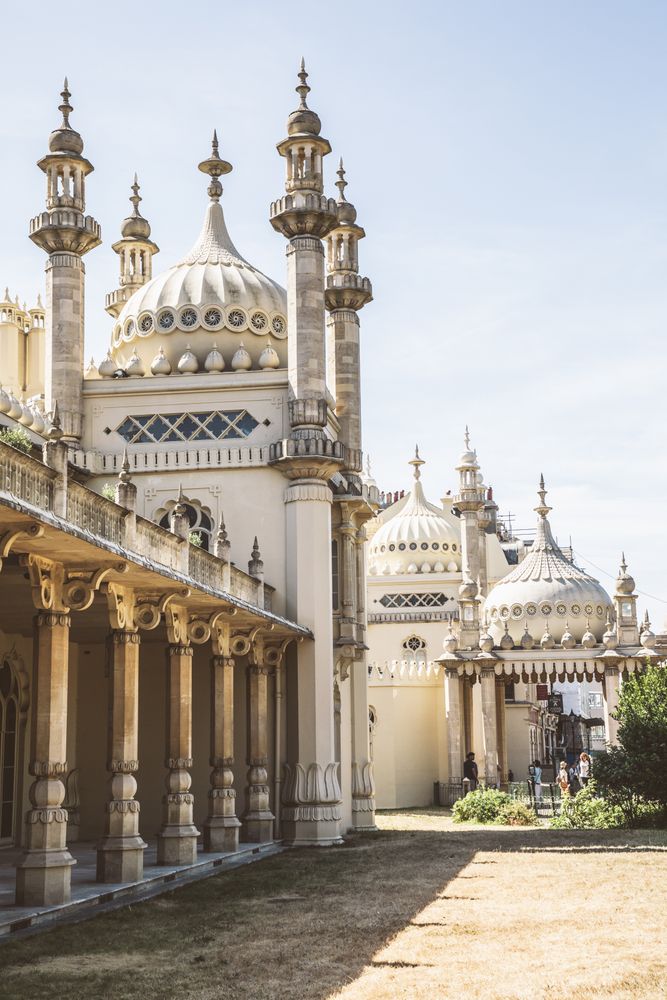
Another Cool Fact: The Pavilion Embraced Electricity
The Royal Pavilion was also involved in Brighton’s technological development.
Local inventor Magnus Volk installed electricity throughout the Pavilion in the 1880s. The central dome alone was fitted with more than 200 carbon filament lamps, making it one of the largest spaces in England to be lit by electricity at the time.
For a building that looks almost like something from a fantasy film, it is fascinating to discover that it was also associated with some of the technological innovations of Victorian Brighton.
Queen Victoria Didn’t Love It
Despite the Royal Pavilion’s incredible appearance, not every royal was a fan.
Queen Victoria found the building unsuitable for her growing family and uncomfortable in terms of space and privacy. She eventually sold the Pavilion to the town of Brighton in 1850 for more than £50,000. Before the sale, many of its interiors, furnishings and fittings were removed for use in other royal residences.
The purchase transformed the building into what could almost be described as a people’s palace.
When it opened to the public in 1850, around 27,000 people visited during the first six days — despite the fact that the building had been stripped of much of its original contents.
Architecture Photography at Different Times of Day
The Royal Pavilion can look completely different depending on the light.
Early morning can provide quieter surroundings and softer light, making it easier to concentrate on architectural details and symmetrical compositions.
Midday light can create stronger shadows and emphasise the three-dimensional shapes of the domes, columns and decorative features.
Late afternoon and evening can produce warmer tones and longer shadows, potentially giving the architecture a more dramatic appearance.
For photographers, the changing relationship between light and architecture is one of the reasons returning to the same building can produce completely different photographs.
Photographing Brighton’s Royal Pavilion
The Royal Pavilion is more than just an unusual historic building. It is a visual record of Regency extravagance, changing architectural tastes, royal ambition, technological development and the transformation of Brighton itself.
For architecture photography, it offers almost everything a photographer could ask for — bold shapes, symmetry, intricate details, contrasting styles, fascinating history and an ever-changing relationship with light.
Whether you’re using a professional camera, a compact camera or simply your phone, take time to look beyond the obvious postcard photograph.
Walk around the building.
Look up.
Look for details.
Experiment with perspective.
Use the surrounding garden and Brighton’s urban environment to frame the architecture.
And most importantly, don’t just photograph the Royal Pavilion — photograph the story that the building tells.
A Photographer’s Perspective
For me, that’s what makes the Royal Pavilion such an interesting photography location in Brighton. It isn’t simply beautiful; it is unusual.
You can photograph the huge domes from across the gardens, move closer to capture intricate architectural details, or look for unexpected angles that reveal something different from the familiar postcard view.
And after spending time photographing the Pavilion, there is an entire city of architectural subjects waiting outside — from Brighton’s Regency squares and terraces to its famous seafront buildings and colourful lanes.
If you enjoy architecture photography in Brighton, the Royal Pavilion is somewhere worth visiting with your camera — and somewhere you can return to again and again and still discover something new.
______________